
Fine Motor Skills Activities for Preschoolers at Home
Easy fine motor skills activities for preschoolers at home. Build hand strength and confidence with short, playful daily practice.
We create age-fit coloring and simple learning activities for families and schools.
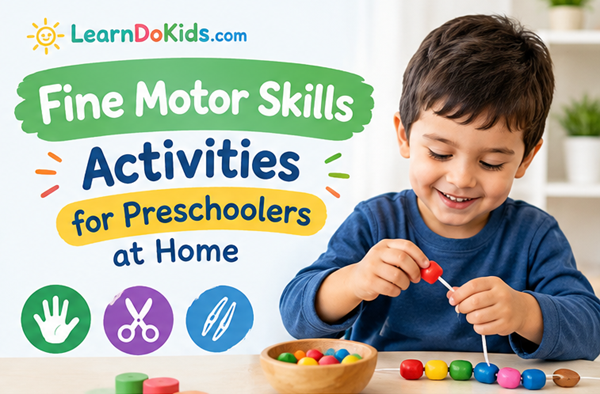
Fine motor skills activities for preschoolers help little hands get ready for writing, buttoning, using scissors, and everyday independence. You do not need a classroom full of supplies. Short, playful practice at home—a few minutes most days—builds strength and confidence better than rare long drills.
This guide is for parents and caregivers of children roughly ages 3–6 in the US, UK, Canada, and Australia. You will find what fine motor skills are, why they matter before kindergarten, and simple activities you can start today. We also share how calm digital coloring can support the same hands-on goals when used in short sessions.
What are fine motor skills?
Fine motor skills are the small movements of the hands and fingers. They include pinching, gripping, turning, and coordinating both hands together. Gross motor skills (running, jumping, climbing) use the large muscles. Both matter. Fine motor control is what helps a child hold a crayon, zip a coat, open a lunch container, and eventually form letters.
Every child develops at their own pace. Some prefer outdoor play and need more invitation to sit with small materials. Others love stickers and beads. The goal is steady practice in a positive tone—not perfection by a certain birthday.
Why fine motor practice matters before school
Kindergarten and Reception-style classrooms ask children to manage pencils, glue sticks, and scissors more often. Children who have had playful hand practice often settle into those tasks with less frustration. Stronger hands also support self-care: dressing, packing a bag, and helping set the table.
Fine motor play also pairs with language. When you name colors, shapes, and actions (“pinch the bead,” “press the sticker”), you build vocabulary while the hands work. That combination—doing plus talking—is powerful for early learning.
How to set up practice that kids will actually do
- Keep sessions short: 10–15 minutes is enough for most preschoolers.
- Offer choice within limits: “Play dough or stickers?” feels better than an open-ended command.
- Sit nearby: Your presence turns practice into connection, not a test.
- Stop while it still feels fun: Ending on success makes tomorrow easier.
- Use what you have: Kitchen tools, paper, and recycled boxes work well.
Easy fine motor activities for preschoolers at home
1. Play dough pinch, roll, and press
Play dough (or salt dough) is one of the best low-prep options. Rolling “snakes,” pinching small balls, and pressing cookie cutters build hand strength. Add a plastic knife for cutting practice. Talk about long, short, thick, and thin as you play.
2. Sticker paths and letter dots
Draw a simple path or large letter on paper. Invite your child to place stickers along the line. Peeling stickers strengthens the pincer grasp used later for pencils. For a name twist, place stickers on the letters of their name.
3. Tongs and tweezers transfer
Use kitchen tongs or child-safe tweezers to move cotton balls, pom-poms, or cereal into an ice cube tray. This builds control and focus. Start with larger items, then smaller ones as skill grows.
4. Bead or pasta threading
Pipe cleaners and large beads are easier than thin string at first. Threading practices bilateral coordination—one hand holds, the other threads. Count beads together for a light math link.
5. Paper tearing and collage
Tearing paper into pieces and gluing them onto a shape (apple, house, bus) builds finger strength without scissors. When your child is ready, introduce child-safe scissors on straight thick lines.
6. Clothespins and clips
Clip clothespins onto a paper plate rim or cardboard edge. Squeeze-and-release action strengthens the same muscles used for grip. Sort clips by color for an extra challenge.
7. Q-tip or finger painting on large shapes
Large outlines of a sun, star, or animal give a clear target. Dabbing color inside the shape practices control. Keep the paper big so success comes quickly.
8. Everyday jobs that count as practice
Buttoning a sweater, opening containers, placing napkins, and helping with Velcro shoes are real-life fine motor work. Framing them as “big kid jobs” often increases motivation.
Where digital coloring fits (without replacing hands-on play)
Screens should not replace play dough and outdoor time. Used on purpose, though, simple tap-to-fill coloring can support visual attention and color naming with less frustration than freehand drawing for some children. On LearnDoKids, children pick a color and tap clear sections of age-fit designs—fruit, animals, vehicles, and letters—in the gallery.
That style of activity pairs well with your offline routine: color a simple apple online, then make a paper-tear apple collage at the table. Explore the ages guide to match designs to your child’s stage, and use a free parent account on login to set up a child profile.
For a personal fine motor language boost, try a name card so your child can color each letter of their name. Keep digital sessions as short as your offline ones.
A sample weekly rhythm
- Monday: Play dough (10 minutes)
- Tuesday: Stickers or tongs transfer
- Wednesday: One simple coloring design online, then name the object aloud
- Thursday: Threading or clothespins
- Friday: Collage or child-helper kitchen jobs
Skip days when everyone is tired. Consistency over months matters more than a perfect week.
When to ask for extra support
If your child strongly avoids all hand tasks, shows ongoing pain, or is much less able than peers over a long period, talk with your pediatrician or an occupational therapist. Early guidance is helpful and does not mean something is “wrong”—it means you are advocating for your child.
Start today
Pick one activity from this list and one clear finish line. Celebrate effort, not only neat results. Strong hands grow through play that feels safe and successful. For more age-right ideas, browse the LearnDoKids gallery, read the blog, or open activities after you create a free account.
Try it on LearnDoKids
Browse clear coloring designs and start free with a parent account.