
Teaching Colors to Toddlers: Simple Activities That Work
Teaching colors to toddlers with everyday games, sorting, and short playful practice—no formal lessons required.
We create age-fit coloring activities that support early language and color play.
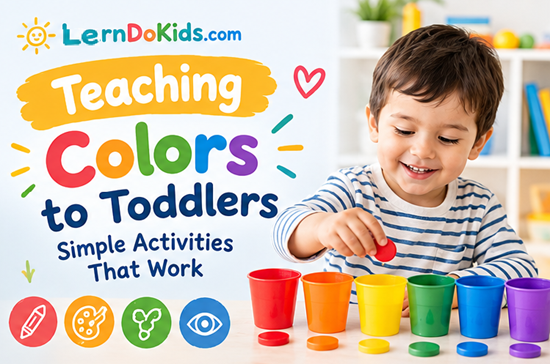
Teaching colors to toddlers works best in short, playful moments—not formal lessons. Toddlers learn color words the same way they learn other language: by hearing them often while looking at real things they care about.
This parent-friendly guide is for families with children roughly ages 2–4 in Western countries. You will get simple games, everyday routines, and a few digital ideas that support color naming without pressure.
How toddlers learn color words
Color is an abstract label. A red ball and a red shirt do not look identical, yet adults use the same word. That is why children often learn object names before color names, and why patient repetition matters more than correction.
Helpful habits:
- Name the color and the object: “red apple,” not only “red”
- Start with a few strong colors: red, blue, yellow, green
- Celebrate attempts, even when the word is not perfect yet
- Avoid testing (“What color is this?”) too early—model first
Everyday color practice at home
Mealtime colors
Talk about yellow bananas, green peas, and orange carrots. Food is motivating and repeatable three times a day.
Getting dressed
“Blue socks or gray socks?” Choice builds autonomy and color exposure together.
Toy sort
Make two piles: blue things and not-blue things. Sorting is clearer than naming every color at once.
Nature or window walk
Point out green leaves, gray clouds, or a yellow bus. Real-world anchors stick.
Simple color games
- Color treasure hunt: “Find something yellow in this room.”
- Match the sock: pair socks by color from the laundry basket.
- Play dough color mix: push yellow and blue together and name the new color when it appears.
- Sticker match: put red stickers only on a red paper plate.
Keep rounds short. One or two minutes of focused play beats a long drill.
Art and coloring that teach colors
Crayons and markers let toddlers hear color names while they choose. For children who get frustrated with freehand drawing, tap-to-fill coloring offers clear regions and quick success. On LearnDoKids, a parent can open a simple fruit or shape in the gallery and say the color as the child taps.
Example script: “You chose yellow for the sun. Yellow is so bright.” Narration beats quizzing.
Match digital play to age using the ages guide, and keep sessions brief. Create a free account at login when you are ready to try with a child profile.
What if they mix colors up?
Mixing up colors is common and normal. Model the correct word gently: “It looks orange to me—orange like a pumpkin.” Avoid shame. Accuracy grows with exposure across months, not one afternoon.
If your child has very limited language overall, or you have other developmental concerns, mention color vocabulary at a routine checkup. Most of the time, play and patience are enough.
A weekly color focus
Pick one color for a few days. Wear it, eat it, find it, and color it. Focus reduces overload. Next week, add a second color and compare.
Bring it together
Teaching colors is relationship time: point, name, play, repeat. Use meals, laundry, and short coloring moments. When you want a calm guided activity, browse simple designs on LearnDoKids or read more parent tips on the blog.
Try it on LearnDoKids
Browse clear coloring designs and start free with a parent account.