
Letter Recognition Activities for Preschoolers at Home
Letter recognition activities for preschoolers at home. Name letters, sensory play, hunts, and short joyful practice.
We help families practice early literacy through play and age-right designs.
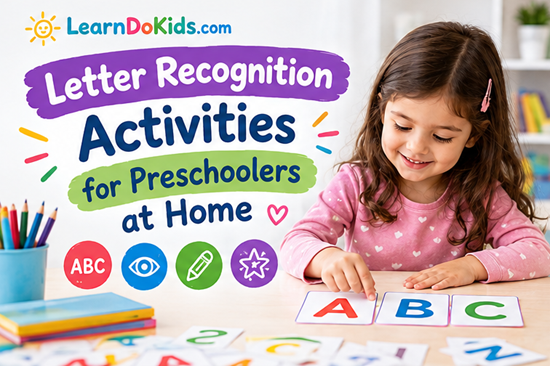
Letter recognition activities help preschoolers notice that letters are special shapes with names and sounds. You do not need a full curriculum at the kitchen table. Short, playful practice—five to ten minutes—builds familiarity before kindergarten.
This guide is for parents of children about ages 3–6 in the US, UK, Canada, and Australia who want practical letter recognition activities at home without turning play into pressure.
Letter recognition vs reading
Recognizing the letter B is not the same as reading words. Recognition means “I know that shape is called B.” Sounds and blending come later for many children. Starting with the letters in a child’s name is one of the most motivating paths.
Principles that keep practice joyful
- Begin with meaningful letters (name letters first)
- Use movement and touch, not only flashcards
- Keep sessions short and end on success
- Pair letters with real objects and pictures
- Repeat across the week instead of one long lesson
High-impact letter recognition activities
1. Name letters every day
Display your child’s name where they can see it. Trace with a finger. Build with magnetic letters. Color each letter on a LearnDoKids name card. Ownership makes letters matter.
2. Letter hunt
Choose one letter. Hunt on cereal boxes, street signs, and book covers. Finding letters in the wild beats isolated drills for many kids.
3. Sensory letters
Form letters in sand, salt, shaving cream, or play dough. Muscle memory supports visual memory.
4. Alphabet coloring with talk
Color a clear letter outline, then name the letter and one word that starts with it. In the gallery, ABC-style designs support this pattern. Keep the talk light: “S is for sun.”
5. Match capital to capital
Before mixed cases, match pairs of the same capital letter from a small set. Reduce the set if frustration rises.
6. Storytime letter search
During a familiar book, ask your child to tap every letter A on the page with a finger. Shared reading plus a mission holds attention.
How digital practice can help
Interactive letter coloring gives instant feedback and a finished product children are proud of. On LearnDoKids, parents pick age-fit activities after signing in, then open letters or simple objects tied to a sound. See how it works and the ages guide for placement.
Digital time should stay short and paired with offline hunts or sensory play the same week.
Sample 10-minute routine
- Point to two letters in the child’s name (2 minutes)
- Hunt those letters on one food package (3 minutes)
- Color one letter online or on paper (5 minutes)
Stop if interest drops. Tomorrow is another chance.
When progress feels slow
Children learn letters at different speeds. Interest in print, hearing stories, and playing with shapes all support later reading. If you have concerns about vision, hearing, or language development, raise them with a professional. Otherwise, keep practice warm and brief.
Explore more ideas on the blog and letter designs in the gallery.
Try it on LearnDoKids
Browse clear coloring designs and start free with a parent account.